CDL Requirements in California: Everything You Need to Know Before Applying
If you’re considering beginning a career as a truck driver in California, obtaining your Commercial Driver’s License (CDL) is the initial major step. CDL requirements in California may seem daunting at first, but getting to know the process, it’s actually a mere set of straightforward steps you go through one by one.
Let’s walk through what the state of California requires of you before you can lawfully operate a commercial vehicle.


What is CDL?
A CDL is not just an advancement of your typical driver’s license. It’s an occupational qualification indicating to employers and the authorities that you’re qualified to operate massive, heavy, and more advanced vehicles in a safe manner.
CDLs are divided into three broad categories in California:
- Class A: Allows you to operate large combination vehicles such as tractor-trailers or flatbeds.
- Class B: For single vehicles weighing more than 26,001 pounds, for example, dump trucks or buses.
- Class C: For smaller commercial vehicles such as vans or hazmat carriers.
The Basic Eligibility Rules
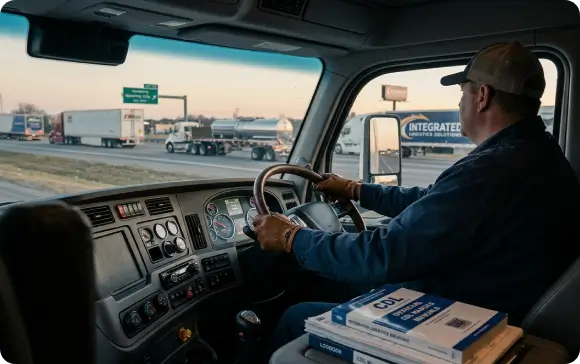
To qualify for a CDL in California, you’ll need to satisfy a few basic requirements:
- Be at least 18 years old to operate in California and 21 or older to operate across state borders or haul hazardous materials.
- Maintain a valid California driver’s license.
- Furnish proof of state residency.
- Pass a DOT exam and obtain a Medical Examiner’s Certificate (Form MCSA-5876).
- Possess a clean driving history – severe traffic offenses can slow down or exclude your application.
After you have all this in order, you’re ready to proceed to the permit phase.
Obtaining a Commercial Learner’s Permit (CLP)
You can’t skip straight to the road test. California wants all CDL applicants to begin with a Commercial Learner’s Permit, or CLP.
To obtain it, you’ll have to provide the DMV:
- A filled-out DL 44C form
- Proof of identity, residence, and your Social Security Number
- Your medical certificate
The written exam will test you on general knowledge, air brakes, and combination vehicles (if you’re applying for Class A).
After you pass the written segment, you’ll be issued your CLP, which allows you to practice driving a vehicle under the supervision of a person holding a valid CDL. The permit is valid for six months and can be renewed only once.
Completing Entry-Level Driver Training (ELDT)
As of early 2022, all new commercial drivers have to undergo an Entry-Level Driver Training (ELDT) program prior to the CDL road test.
The regulation resulted from federal safety updates in order to ensure new drivers receive adequate training prior to driving.
Training is a combination of theory (classroom work) and behind-the-wheel practice in actual trucks. Subjects vary from pre-trip checks and shifting through hours-of-service rules to hazard awareness.
Only authorized training providers who are listed on the FMCSA Training Provider Registry may provide this program. Institutions like Doaba Truck Driving School in the Bay Area are fully compliant with all ELDT requirements and report completion directly to the DMV.
The Skills Test
Once your instructor thinks you’re ready, you’ll have to schedule an appointment for your skills test.
It’s a three-part exam that will determine how ready you are to drive in the real world.
Pre-Trip Inspection – Learning and describing the main components of your truck. The ‘testing your knowledge’ phase.
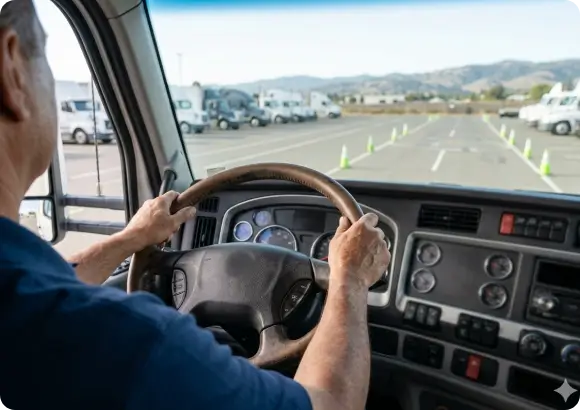
Basic Controls – Easy but crucial maneuvers: parking, backing up, and so on.
On-road Test – Driving on real roads. You must demonstrate safe practices and attentiveness.
Pass all three and you’ll receive your CDL.
Add Endorsements (Optional)
Once you have your CDL, you can add endorsements to further enhance your credentials:
- T – Double/Triple Trailers
- N – Tankers
- H – Hazardous Materials (HazMat)
- P – Passenger Vehicles
- S – School Bus
Each requires a short written exam. In some cases, background checks may also be conducted.
Keep Your License Active
Maintaining your CDL is important
- Keep your medical certificate up-to-date.
- Follow all federal and state trucking rules – to the letter.
- Renew your CDL every five years through the DMV.
- Staying compliant is key. Serious violations can lead to suspension.
Each requires a short written exam. In some cases, background checks may also be conducted.
How Much Will it Cost to Obtain a CDL?
Below’s the general idea, though fees may change slightly over time. It’s best to confirm the latest costs with your local DMV office before applying.
- Application Fee: $85 for an original CDL
- Testing: Included in the application, but retakes may cost extra.
- Endorsements: Some (like HazMat) require additional background check fees.
What Can You Drive with a CDL?
Different types of CDL allow you to drive different types of vehicles:
- A Class A CDL : permits operating large rigs, tractor-trailers, and combinations. Vehicles weighing more than 26,001 pounds.
- A Class B CDL : permits you to operate buses, straight trucks, dump trucks, and other single big vehicles.
- A Class C CDL : encompasses smaller passenger vehicles and those that carry special materials.
You can also acquire endorsements to broaden your employment opportunities – such as carrying passengers, hauling tankers, or transporting hazardous materials.
Frequently Asked Questions
What are the basic requirements to get a CDL in California?
To get a Commercial Driver’s License (CDL) in California, you must be at least 18 years old for intrastate driving (within California) or 21 years old for interstate driving (across state lines). You must also have a valid California driver’s license, pass a DOT medical exam, obtain a Commercial Learner’s Permit (CLP), complete Entry-Level Driver Training (ELDT), and successfully pass the required written and driving tests.
Do I need a regular California driver’s license before applying for a CDL?
Yes. Before applying for a Commercial Learner’s Permit (CLP) or CDL, you must already hold a valid California Class C driver’s license. This is one of the first eligibility requirements for becoming a commercial driver.
What is the minimum age to get a CDL in California?
You can apply for a CDL at age 18 if you plan to drive only within California (intrastate). If you want to drive across state lines, transport hazardous materials, or operate in interstate commerce, you must be at least 21 years old.
Is a DOT medical exam required to obtain a California CDL?
Yes. Every CDL applicant must pass a DOT physical examination performed by a certified medical examiner. The exam confirms that you are medically qualified to safely operate a commercial vehicle and meet federal and state health standards.
What is ELDT, and is it mandatory in California?
ELDT (Entry-Level Driver Training) is federally required for most first-time Class A and Class B CDL applicants. In California, eligible applicants must complete ELDT through an approved training provider before taking the CDL skills test.
What tests do I need to pass to earn my California CDL?
You’ll need to pass the CDL knowledge (written) test to obtain your Commercial Learner’s Permit (CLP). After completing the required training, you’ll also take the CDL skills test, which includes a pre-trip inspection, basic vehicle control maneuvers, and an on-road driving test.
What documents do I need when applying for a CDL in California?
Most applicants will need a valid California driver’s license, proof of identity, proof of residency, a Medical Examiner’s Certificate (DOT medical card), and any additional documents required by the California DMV for CDL applications.
Can I get a CDL if I have a poor driving record?
It depends on your driving history. Certain serious traffic violations, license suspensions, or DUI convictions may affect your eligibility or delay the licensing process. It’s best to review your driving record or speak with a CDL training school for guidance based on your situation.
How long does it take to meet California CDL requirements?
The timeline varies depending on your training schedule and how quickly you complete each step. Most students finish their CDL training and licensing process within a few weeks after completing their ELDT training, passing the written exam, and successfully completing the CDL skills test.
How can Doaba Truck Driving School help me meet California CDL requirements?
Doaba Truck Driving School provides comprehensive CDL training that guides students through every stage of the licensing process. From preparing for the Commercial Learner’s Permit (CLP) test to hands-on behind-the-wheel instruction and CDL skills test preparation, the school helps students build the knowledge and confidence needed to earn their California CDL.