How to Become a Truck Driver in California: A Beginner’s Guide
Summary: “Becoming a truck driver in California requires meeting age and medical requirements, obtaining a Commercial Learner’s Permit (CLP), completing Entry-Level Driver Training (ELDT) with at least 15 hours of behind-the-wheel practice, and passing the DMV skills test. With proper training and documentation, aspiring drivers can earn a Class A or Class B Commercial Driver’s License (CDL) and pursue local or long-distance trucking careers, with typical starting salaries ranging from $50,000 to $70,000 annually. Doaba Truck Driving School offers approved training, experienced instructors, and job placement assistance to help new drivers meet California’s licensing requirements and begin successful trucking careers.”
To become a truck driver in California, you must be at least 18 years old, pass a DOT medical exam, obtain a Commercial Learner’s Permit (CLP), complete a mandated Entry-Level Driver Training (ELDT) program featuring at least 15 hours of behind-the-wheel practice, and pass the California DMV road skills test.
The logistics industry is booming right now, and California’s highways are the absolute lifeline of the nation’s supply chain. From the massive ports in Long Beach to the agricultural hubs in the Central Valley, freight never stops moving. Because of this, trucking companies are constantly scrambling to hire safe, qualified people.
If you are looking at this career from the outside, the process of actually getting your license seems incredibly complicated. You hear about federal ELDT rules, mountains of DMV paperwork, and strict medical clearances, and it is easy to feel overwhelmed before you even start.
The good news? It really isn’t that bad once you break it down. We have watched countless beginners navigate this exact process. The key is just taking it one step at a time. This step-by-step roadmap gives you everything you need to know about getting your California CDL and launching a career that can support you for a lifetime.
Basic California Truck Driver Requirements
Age Requirements (Intrastate vs. Interstate)
A lot of younger people ask us how to become a truck driver at 18 in California. The reality is, you absolutely can. At 18, you are cleared for intrastate driving, meaning you just have to stay inside state lines. If you want to cross state borders (interstate) or haul hazardous stuff, you have to wait until you turn 21.
Background and Documentation
To get started, you need a regular California driver’s license. The DMV is going to ask for your Social Security Number (SSN) and proof that you actually live in the state. They will also pull your driving record. A few minor tickets might slide, but major violations like a DUI will usually disqualify you right out of the gate.
Step 1: Pass the DOT Medical Exam
You do not need to be an Olympic athlete to drive a rig, but commercial driving does require basic physical health. You have to sit down with an FMCSA-approved medical examiner to make sure your vision, blood pressure, and overall health are up to par.
Once they clear you, they hand over a Medical Examiner’s Certificate (MEC). Before you book your appointment, check out these DOT medical exam requirements so you know exactly what the doctor will test.
Step 2: Get Your Commercial Learner’s Permit (CLP)
Think of a CLP like the learner’s permit you got when you were sixteen. It lets you legally practice driving a massive truck on public roads, as long as a licensed instructor is sitting next to you.
To get it, grab the California Commercial Driver Handbook and study up. You have to pass a few written DMV tests: General Knowledge, Air Brakes, and Combination Vehicles. We put together a great commercial learner’s permit guide to help you pass these written tests on the first try. Oh, and remember. California makes you wait 14 days after getting your CLP before you can take the actual road test.
Step 3: Complete Entry-Level Driver Training (ELDT)
Federal and State Mandates
A few years back, the federal government (FMCSA) rolled out the Entry-Level Driver Training mandate. This rule basically says that you cannot just learn to drive from a buddy in an empty parking lot anymore; you have to go through a formal training program.
California, however, took the federal rule and made it much stricter. If you are applying for an original Class A or Class B license in California, state law mandates that you complete a minimum of 15 hours of actual behind-the-wheel training. Furthermore, at least 10 of those 15 hours must be spent driving on a public road. You cannot just sit in a simulator to knock these hours out; the state wants you dealing with real traffic.
Choosing the Right Truck Driving School
Because of these strict training rules, picking the right school is the most important decision you will make. You have to find a program that is officially registered with the federal Training Provider Registry (TPR).
When touring schools, look at their equipment. Are the trucks modern and well-maintained? Ask about their class sizes. Most importantly, ask if they offer job placement assistance after you graduate. When you are ready to commit, enrolling in a reputable Class A CDL training program ensures you get the exact training you need to satisfy both the FMCSA and the California DMV.
Step 4: Pass the California CDL Skills Test
After you finish your ELDT program, you will head back to the DMV for the final hurdle: the road skills test. This is where you prove you can handle the rig. It happens in three distinct parts.
Vehicle Inspection (Pre-Trip)
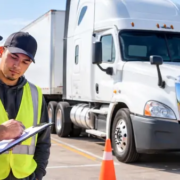
Before you even put the key in the ignition, the examiner will ask you to perform a pre-trip inspection. You have to walk around the truck and systematically point out specific engine components, check the air brake system, and physically prove that the vehicle is safe to operate.
Basic Control Skills
Next, you move to the skills yard. The examiner wants to see that you can maneuver the truck at low speeds without hitting anything. You will have to demonstrate straight-line backing, parallel parking, and the alley dock, which involves backing a 53-foot trailer into a tight space at an angle.
The Road Test
If you clear the yard, it is time for the real deal. You will take the truck out onto public California streets with the examiner riding shotgun. They will grade how safely you shift gears, manage your speed on grades, handle tight intersections, and navigate everyday traffic.
Step 5: Start Your Trucking Career in California
Once the examiner hands you your passing paperwork, you are officially a commercial driver. The hardest part is over.
Because of the massive driver shortage, entry-level job opportunities are everywhere. You can choose a local route delivering goods around your city, which allows you to sleep in your own bed every night. Or, if you want to travel, you can take an over-the-road (OTR) job hauling freight across the state or the country. Starting salaries in California typically range from $50,000 to $70,000, and your earning potential goes up rapidly as you gain experience and add endorsements to your license.
Why Trust Doaba Truck Driving School?
We have spent years right here getting new drivers ready for California’s specific roads and tough DMV tests. Our instructors know the FMCSA rules and the strict California 15-hour behind-the-wheel mandate inside and out.
At Doaba Truck Driving School, we do not just train you to pass a test. We want to put you in a career. Our modern fleet, TPR-approved curriculum, and strong job placement assistance mean you leave our yard as a safe, highly skilled, and employable professional.
Frequently Asked Questions
Q. How long does it take to become a truck driver in California?
A. Most people finish school and get their license in about four to eight weeks, depending on whether they train part-time or full-time.
Q. How much does truck driving school cost in California?
A. You can expect tuition to sit anywhere from $3,000 to $7,000. It depends heavily on how much driving time the program includes.
Q. Can I get a CDL with no prior experience?
A. Yes. Every beginner CDL training program assumes you have never been inside a big rig before.
Q. What is the difference between a Class A and Class B CDL?
A. Class A is for driving huge tractor-trailers (semi-trucks). Class B is for single vehicles, like dump trucks or heavy box trucks.
Q. Do I need a high school diploma to become a truck driver?
A. The law does not require a diploma. However, some larger trucking companies might ask for one when you apply for a job.
Q. Can I get paid while training for my CDL?
A. Yes, certain mega-carriers offer paid training, but they usually make you sign a contract to work for them for a year.
Q. Is a drug test required for truck drivers in California?
A. Absolutely. The federal government requires strict pre-employment drug testing, plus random testing throughout your career.
Q. Are truck drivers in demand in California right now?
A. Yes. Between the massive shipping ports and daily e-commerce deliveries, companies are constantly hunting for safe drivers.
Q. Can I drive a commercial truck at 18 years old?
A. Yes, but you are legally limited to intrastate driving, which means you cannot cross the California state line.
Q. What happens if I fail the CDL skills test?
A. Do not panic. You can pay a small retest fee and try again, though the DMV does cap how many times you can fail before starting over.
Conclusion
Learning how to become a truck driver in California takes some real effort. You have to pass the medical checks, master the written exams, and put in your required 15 hours behind the wheel. But once you knock out those California truck driver requirements, you have a solid, high-paying skill for life. Ready to get behind the wheel? Reach out to Doaba Truck Driving School today to schedule your free CDL consultation.