What Is a CDL Permit? The Complete Guide to Commercial Learner’s Permits (CLP)
Summary:
A Commercial Learner’s Permit (CLP) allows new drivers in California to practice operating commercial vehicles on public roads under the supervision of a properly licensed CDL driver. To get a permit, applicants must meet age and license requirements, pass a DOT medical exam, provide required documents, and pass written tests covering general knowledge, combination vehicles, and air brakes. After receiving the permit, drivers must complete required training, practice behind the wheel, hold the permit for at least 14 days, and pass the DMV skills test to earn a full CDL.
So you want to drive a truck. That’s a solid career move. The trucking industry is actively hiring right now, with analysts projecting over 237,000 job openings annually over the next decade, and the pay can truly change your life. But before you can hop into the cab of a Peterbilt and start floating gears, you run into a wall of DMV paperwork.
The biggest hurdle for beginners? Getting your Commercial Learner’s Permit.
A lot of people show up at our driving school expecting to get behind the wheel on day one. We hate being the guys to break the news, but federal law doesn’t work like that. You cannot legally drive a commercial rig on public roads until you pass your medical exams and clear a stack of written tests.
Let’s break down exactly what this permit is, what the California DMV expects from you, and how to get through the testing process without pulling your hair out.
What Is a CDL Permit (Commercial Learner’s Permit)?
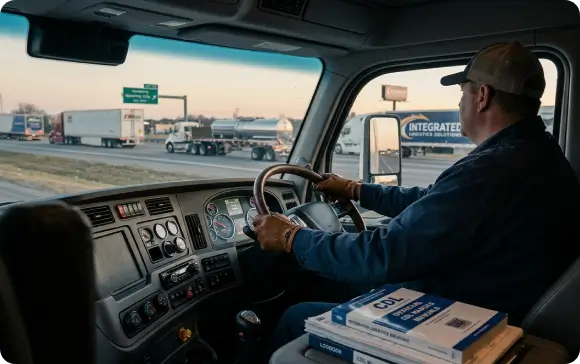
Think of a Commercial Learner’s Permit (CLP) as your golden ticket to sit in the driver’s seat. It doesn’t mean you can haul freight for cash yet, but it does make it legal to practice on public roads. The catch? A veteran commercial driver has to ride shotgun.
Quick Summary: A CLP is an official state document authorizing you to operate a commercial truck or bus for training purposes. A fully licensed CDL holder must be seated right next to you at all times. You literally cannot take your final road test without getting this permit first.
CDL Permit vs. CDL License: Understanding the Key Differences
We see rookies confuse these two all the time. A permit is for learning. A license is for earning. Here is the breakdown:
| Feature | Commercial Learner’s Permit (CLP) | Full Commercial Driver’s License (CDL) |
| Primary Purpose | Supervised practice driving | Independent trucking and employment |
| Supervision | A licensed CDL holder must sit in the front seat | None required. You drive solo. |
| Driving Rules | No solo cargo runs. Tankers must be empty. | Full commercial transport is completely legal. |
California CDL Permit Requirements (Who Is Eligible?)
Don’t just show up at the DMV assuming you can take a test. You have to prove you are eligible first.
Age & License Prerequisites
You have to be at least 18 years old to drive inside California lines (intrastate). If you want to cross state borders or haul hazardous stuff, you must be 21. You also need a perfectly clean, standard Class C car license. Going through the overall California CDL requirements before you start studying will save you a major headache later.
DOT Medical Exam & Physical Qualifications
Trucking is physically demanding. You cannot just use your family doctor for this part. You have to pass a physical with an FMCSA-certified examiner. If you aren’t sure what they test for, checking a DOT physical examination guide is a smart move. Once you clear the exam, they hand you a Medical Examiner’s Certificate. Guard this paper with your life. The DMV needs it.
Identity & Residency Documentation
The DMV is incredibly strict about paperwork. Bring your REAL ID, your actual Social Security Card (no photocopies), and two utility bills to prove you live in California. We’ve seen guys get turned away because their bank statement was a week too old. Bring backups.
What Tests Must You Pass to Get a CDL Permit?
Alright, here is where the real work begins. If you want a standard Class A permit for an 18-wheeler, you are looking at three main written exams.
1. General Knowledge Test
This is the beast. It is 50 questions covering everything from hazard perception to basic safety. Study hard for this one.
2. Combination Vehicles Test
Since you are pulling a heavy trailer, the DMV wants to know you can hook it up without dropping it on the highway. This is a 20-question test all about fifth wheels and coupling.
3. Air Brakes Test
Most commercial rigs use air pressure to stop, not brake fluid. This 25-question exam covers dual air systems and leak checks. Don’t blow this off. If you fail, the DMV slaps a restriction on your permit, meaning you can’t drive standard trucks.
Optional Endorsements
Want to drive a school bus or haul gasoline? You will need to pass extra written tests for those specific endorsements.
Step-by-Step: How to Get Your CDL Permit in California
Want the fastest route through the red tape? Follow this exact order:
- Study the California Commercial Driver Handbook: Don’t rely on random internet quizzes. Read the actual state manual.
- Pass Your DOT Physical: Get that medical card in your wallet first.
- Complete the Online Application: Fill out the DMV paperwork on your phone or computer before you go to the office. It saves an hour of standing in line.
- Take Your Knowledge Tests: Walk into the DMV, present your documents, and pass your exams on their computers.
- Pay the Fee: Hand over the $98 application fee, and they will print your official permit right there.
Rules and Restrictions: What Can You Drive with a CDL Permit?
Getting the paper feels great, but remember you are still a student.
Mandatory Supervision Rules
You cannot take the truck to the grocery store by yourself. The person in the passenger seat must have a valid CDL that matches or exceeds the class you are testing for. They have to stay awake and alert.
Cargo and Passenger Restrictions
You can’t haul paying passengers. If you are training with a tanker, it has to be totally empty and purged. No exceptions.
The 14-Day Mandatory Waiting Period
You cannot speedrun the trucking industry. Federal law makes you hold your permit for exactly 14 consecutive days before they even let you schedule a road test. Use that time to practice.
What Happens After You Get Your CDL Permit?
So you passed the written tests. What next? Now you actually have to learn how to drive the truck.
1. Complete Mandatory ELDT
A few years ago, the government changed the rules. You can’t just have your uncle teach you in an empty parking lot anymore. Navigating the FMCSA ELDT requirements means you legally have to enroll with a registered training provider before you can take a road test.
2. Hands-On Yard Practice
You will spend days in a practice yard doing two things: backing up between orange cones and memorizing how to pass the CDL pre-trip inspection. Reversing a 53-foot trailer takes serious patience.
3. Public Road Driving
Once you stop hitting cones, your instructor takes you out on public roads to practice merging, shifting, and dealing with everyday traffic.
4. Passing the DMV Skills Test
The final boss. It is a three-part physical test (inspection, backing, and road driving). This is exactly why signing up for a reputable Class A CDL training program is so important, they teach you exactly what the DMV examiner wants to see.
Common CDL Permit Mistakes to Avoid
- Using old study guides: The DMV updates questions all the time. An app from 2019 will cause you to fail.
- Forgetting the air brakes test: A lot of students skip studying this section and end up restricted.
- Letting it expire: Your permit is only valid for 180 days. If you don’t get your full license before it expires, you have to do the written tests all over again.
Frequently Asked Questions
Q. What is a CDL permit?
A. Think of it as your official training pass. It legally lets you practice driving a heavy rig on public roads. But there is a catch. A fully licensed trucker must be sitting right next to you the entire time. No exceptions.
Q. What is the difference between a permit and a license?
A. A permit keeps you on a tight leash for supervised learning. You cannot haul freight for a paycheck with it. A full license proves you beat the final road test. That means you can finally drive solo and earn a living.
Q. How do I get one in California?
A. First things first: pass a physical exam with a certified doctor. After you get cleared, take your ID and proof of residency down to the DMV. From there, you just have to pass three multiple-choice knowledge tests on their computers.
Q. How long do you have to hold the permit before testing?
A. The federal government does not let anyone rush the process. You are required to hold that learner’s permit for exactly 14 consecutive days. Only then will they let you attempt the driving skills test.
Q. Can you drive a commercial truck alone with a permit?
A. Never. Doing that is highly illegal and will get you shut down fast. A driver holding a valid commercial license of an equal or higher class must be awake in the passenger seat. At all times.
Q. How long is the permit valid?
A. In California, your permit stays good for a maximum of 180 days from the day it is issued. If you need more time to practice, you will generally have to renew it or just start the application over.
Q. What written tests are required?
A. Going for a standard Class A setup? Expect three exams. You must pass the General Knowledge Test, the Combination Vehicles Test, and the Air Brakes Knowledge Test.
Q. Do I need a DOT physical exam?
A. Yes, it is completely non-negotiable. You must pass a health screening done by a doctor listed on the national registry. If you don’t have that medical card, the DMV will not even look at your application.
Q. Is Entry-Level Driver Training (ELDT) mandatory?
A. Yes. Before you can schedule your final road test, federal rules strictly demand that you complete certified training. You have to do this through a registered school or provider.
Q. How much does it cost in California?
A. The original commercial Class A or B application fee at the California DMV currently sits at $100. That fee covers your application processing. It also gives you up to three tries to pass the knowledge tests.
Why Choose Doaba Truck Driving School?
Passing a written test is easy. Keeping an 80,000-pound truck perfectly centered in a tight highway lane? That takes actual skill.
At Doaba Truck Driving School, we do more than help you pass a test. We are a fully FMCSA-registered training provider, which means our curriculum meets all federal ELDT standards.
We use modern, well-maintained fleets with both automatic and manual transmissions so you are ready for whatever your future employer throws at you. Our bilingual instructors have years of real-world highway experience.
They will be right there in the passenger seat, showing you the exact tricks to nail your backing maneuvers, crush the pre-trip inspection, and drive defensively. Plus, we offer flexible schedules to fit around your current day job.
Conclusion
Getting your Commercial Learner’s Permit is the very first step toward a totally new career. It proves you understand the safety laws, you passed the medical checkup, and you are serious about this industry. Grab the DMV handbook today, schedule your physical, and knock out those written tests. Once you have that permit in your hand, you are ready to climb into the cab and start your real training.


Leave a Reply
Want to join the discussion?Feel free to contribute!